ONLINE AP SPANISH TUTORING
AP Spanish tutoring, one-to-one, built for the new speaking project and exam
Educifly is an online AP Spanish tutoring service. Your AP Spanish tutor is a Spanish specialist who works with you live, one-to-one, on everything the AP Spanish Language and Culture exam tests: the course project presentation and Q&A, the argumentative essay, and the listening and reading questions. Lessons follow the new, fully digital exam.
Free trial lesson · No card · No contract · No pressure
Built for AP Spanish students across the US and Canada — and at American and international schools in London, Madrid, Paris, Brussels, Mexico City and Dubai.
Teaching since 2018
Families in 12 countries
Free trial, no card
EXAM DAY · THE CLOCK STARTS
Project Presentation
Then four unseen questions, 40 seconds each:
Q1
0:40
Q2
0:40
Q3
0:40
Q4
0:40
35%
Of your score comes from the project
3 tasks
Presentation, Q&A, argumentative essay
6 units
Every theme in the course
THE REAL CHALLENGE
Plenty of good Spanish students still freeze when the clock starts
AP Spanish doesn’t test whether you can fill in a worksheet. It tests whether you can listen to real Spanish at real speed, read real articles, write an argument, and then speak for three minutes without stopping. Good students lose points here not because they don’t know Spanish, but because nobody trained them for the way the exam works.
Speaking out loud, on a timer
Three minutes of presentation and four quick answers of 40 seconds each, spoken into a headset. Students who only practice in their head go quiet the moment the timer starts.
The project starts in January
The project is worth 35% of the exam, and the packet arrives in January. Students who leave it until April end up memorizing a script instead of knowing their topic.
Listening at native speed
Half of the multiple choice is listening: real interviews, reports and conversations. If your ear isn’t trained, you’re still translating the first sentence when the next question begins.
The essay takes a side — with sources
The argumentative essay asks you to use written and audio sources that disagree, and take a clear position. Summing up each source in turn earns very little.
START HERE
AP Spanish Language and Culture, explained in plain English
One course, one exam, three kinds of communication. Here’s what you need to know before your first lesson.
What is AP Spanish Language and Culture?
AP Spanish Language and Culture is a College Board course taught entirely in Spanish. Students practice three kinds of communication: interpersonal (talking with someone), interpretive (understanding what they read and hear) and presentational (speaking or writing for an audience). The course has six units and is about the level of an upper-intermediate college Spanish class. The exam is scored from 1 to 5.
How the AP Spanish exam works
The AP Spanish Language and Culture exam is fully digital and taken in the College Board’s Bluebook app with a wired headset and microphone. It lasts about two and a half hours. Section I is free response, worth 50%: a project presentation, a project Q&A and an argumentative essay. Section II is multiple choice, worth 50%: 25 listening questions and 30 reading questions, 40 minutes each.
What is the AP Spanish course project?
The course project is research you do in Spanish before exam day, on a theme College Board sets for the year. You explore Spanish-language sources, plan a presentation and send a short outline of it, called the Personalized Project Reference (PPR), through the AP Digital Portfolio. On exam day you get a printed copy of your outline, give a three-minute presentation and answer four questions about your project.
What changed — the old exam vs. the new one
Speaking
A simulated conversation and a cultural comparison
A project presentation and a project Q&A
Writing
An email reply and an argumentative essay
The argumentative essay only
Order
Multiple choice first
Free response first
Multiple choice
Print texts, then audio and combined texts
Listening, then reading, 25% each
Older review books and many tutoring sites still describe the old exam. If yours talks about an email reply or a cultural comparison, it’s out of date. Studying IB Spanish instead? Our IB vs AP guide explains the difference, and our IB Spanish tutors cover ab initio and Spanish B.
WHY ONLINE WORKS
Online AP Spanish tutoring that sounds like the real exam
The AP Spanish exam is now taken on a computer, with a headset on, talking to a screen. Online lessons are the closest thing to that. Searching for an AP Spanish tutor near me makes sense — but the best one for you is rarely on your street. Online, your choice isn’t limited by your zip code.
🎧
Practice the way the exam feels
Headset on, timer running, questions you haven’t seen. We rehearse the presentation and the 40-second answers on screen, so test day feels like one more lesson.
🎯
A Spanish specialist, wherever you live
In Houston, Toronto or Brussels, you work with someone who teaches Spanish every week — not a general tutor who “also does languages”.
📻
Real Spanish, from real places
Podcasts, news clips, interviews and articles from Spain, Mexico, Argentina, Colombia and beyond, so your ear gets used to different accents before the listening section.
🗓️
Lessons that fit a busy junior year
Around school, sports and other APs. Evening and weekend slots in US time zones, plus after-school times in Europe and the Gulf.
HOW IT WORKS
From your first lesson to a confident test day
A simple path, shaped around your class, your level and the project calendar.
1
Free trial and diagnosis
A short conversation, a quick listening task and a look at a recent piece of writing. We find the exact skills costing you points.
2
Your plan
A week-by-week plan that follows your school’s units and the project dates, from the January packet to the outline deadline in late April.
3
Weekly one-to-one lessons
Each lesson mixes speaking, listening and one grammar or vocabulary goal you actually need. You leave knowing what to practice before next time.
4
The exam run-in
From April: full practice exams in the real order, free response first, with a headset and a timer.
A typical AP Spanish year with us
SEPTEMBER AND OCTOBER
Build the habits: listening every week, reading real articles, and speaking without stopping to translate. We fix the grammar slips that show up most in your speech.
NOVEMBER AND DECEMBER
The argumentative essay. How to take a side, use sources that disagree, and organize your ideas in clear paragraphs.
JANUARY
The project packet arrives. We help you choose an angle you care about and plan how to find good Spanish-language sources.
FEBRUARY AND MARCH
Research and rehearsal. You build your presentation, and we practice answering unseen questions about it in 40 seconds.
APRIL
Your outline (the PPR) goes in by the late-April deadline. Then full practice exams with a headset, plus listening and reading sets.
STARTING LATE?
We focus on the project first — it’s 35% of the score — then the essay plan and a weekly listening routine.
WHAT WE COVER
Every AP Spanish task and unit, and where students lose points in each
Here is every part of the exam, its share of your score, and the mistake we see most often — because knowing where points go is half the battle.
20%
Project Presentation
3 min to prepare, 3 min to speak
Reading a memorized script, then stalling when you lose your place
15%
Project Q&A
4 questions, 40 seconds each
Short “sí, es interesante” answers with no reason or example
15%
Argumentative Essay
55 min, audio played twice
Summarizing each source instead of arguing your own position
25%
Listening (multiple choice)
25 questions, 40 min
Missing the main idea while translating word by word
25%
Reading (multiple choice)
30 questions, 40 min
Answering from memory instead of going back to the line the question points to
The three free-response tasks we coach
Each task has its own job and its own trap. We practice them one at a time, then together under time.
Project Presentation (20%)
You present what you learned from your project research, in Spanish, for three minutes, after three minutes to get ready.
WHERE POINTS GO
A memorized script that falls apart under pressure, and facts with no cultural insight — what the topic shows about how people live and think.
Project Q&A (15%)
Four audio questions about your project that you haven’t heard before, with 40 seconds to answer each.
WHERE POINTS GO
One-line answers, and English words when nerves kick in. We train a simple answer shape: your point, a reason, an example.
Argumentative Essay (15%)
You read and listen to sources that give different views on a question, then write an essay that takes a clear side. It isn’t about your project topic.
WHERE POINTS GO
No clear position, sources quoted without being explained, and paragraphs with no linking words.
How we plan the essay — four steps
1
Read the question first and decide what the two sides are.
2
Take notes on the audio — the second listen is for the details you missed.
3
Pick your side and two or three reasons, each backed by a source.
4
Write with linking words — en primer lugar, sin embargo, por lo tanto, en conclusión — and leave a few minutes to check verb endings and accents.
The course project — how a tutor helps (and what they won’t do)
College Board says the project must be your own work. Good tutoring makes it more yours, not less.
What we do
Help you understand the theme and choose an angle you care about; show you how to find and read Spanish-language sources; teach the vocabulary for your topic; listen to your practice presentations and give feedback; and fire unseen questions at you so the Q&A feels easy.
What we don’t do
Write your presentation, your outline (PPR) or your answers. You build them; we coach you until you can talk about your topic naturally, without a script.
The six units
The course is built on six units. The exam doesn’t give each unit its own weight — instead, any unit can show up in the listening, reading and essay sources. So we cover all six.
1
Families and Communities
Family life, friendship, traditions and how communities work together.
WHERE POINTS GO
Vocabulary that stays at a “my family is nice” level.
2
Language and Culture
How language shapes identity, bilingual lives and the many cultures of the Spanish-speaking world.
WHERE POINTS GO
Talking about “Hispanic culture” as if it were one thing.
3
Art and Creativity
Music, art, film, literature and design.
WHERE POINTS GO
Describing a work without saying what it shows about the culture behind it.
4
Science and Technology
Social media, health, innovation and the environment.
WHERE POINTS GO
Missing the topic words that come up again and again in news-style audio.
5
Contemporary Life
School, work, free time, travel and daily routines.
WHERE POINTS GO
Slipping between past tenses when telling a story — the preterite and the imperfect.
6
Global Contexts
Big issues: migration, inequality, sustainability and human rights.
WHERE POINTS GO
Having an opinion but not the subjunctive to express doubt, hope or advice.
YOUR TUTOR
AP Spanish tutors who get you talking from lesson one
You’re matched with a Spanish specialist, not a generalist covering five subjects. Our AP Spanish tutors come from the same team that teaches IB Spanish — a course built on speaking, listening and writing about real-world themes — so oral practice and source-based writing are everyday work for them.
Fluent, patient speakers
Comfortable with the accents and vocabulary of Spain and Latin America, and patient enough to let you finish your sentence before they help.
They know the new exam
The project, the 40-second answers, the essay and the Bluebook format — and how the old tasks your textbook may still show have changed.
They teach you to speak for yourself
Gentle when you’re nervous, demanding when you’re aiming for a 5, and focused on you talking naturally without a script.
WHO IT’S FOR
Built for every kind of AP Spanish student
From the student who freezes on the mic to the one who grew up speaking Spanish at home, there’s a plan for you.
🎙️
The good student who freezes
You get A’s on tests but go quiet when you have to speak. We build speaking time into every lesson until three minutes feels short.
🏡
The heritage speaker
You speak Spanish at home and understand almost everything, but written accents, spelling and formal writing hold you back. We work on the essay, academic vocabulary and polish.
📦
The project starter
The packet has arrived and you don’t know where to begin. We help you choose an angle, find sources and practice the presentation — the work stays yours.
⏰
The student starting late
It’s spring and the exam is close. We focus on the 35% project share, the essay plan and a short daily listening habit.
🌍
The international-school student
Taking AP at an American school in London, Madrid, Paris, Mexico City or Dubai, or switching from IB or IGCSE Spanish. We teach the AP course and the AP exam, in your time zone.
Taking more than one AP? See all our AP tutoring — including AP French tutoring and AP English Language tutoring.
WHY EDUCIFLY
A specialist AP Spanish tutor vs. the usual options
Most Spanish help isn’t built around the AP exam — and a lot of it still teaches the old one. Here’s the honest difference.
Teaches the new exam format
Yes — project, Q&A, essay
Depends who you book
Often the old tasks
Project and Q&A coaching
Built into every plan
Rarely
No
Timed speaking with a headset
Every few weeks
Hit or miss
No one listens back
Feedback on your essay
Every draft
Sometimes
No
Same tutor every week
Yes
Not always
—
Plan built from a diagnosis
Yes, from the free trial
Rarely
No
Pricing
AP Spanish tutoring from
$50 to $150 per hour
1-on-1 online AP Spanish tutoring at Educifly costs $50–$150 USD per 60-minute session. Where you sit in that range depends on three things — and your first lesson is free.
Tutor experience
Rates depend on your tutor’s experience: a more experienced tutor costs more, and the most experienced AP specialists sit at the top of the range.
Level and pathway
Your rate also reflects your current level in AP Spanish.
Crash courses
Intensive pre-exam programs in the weeks before the May AP exams are priced above regular weekly lessons.
Included at every rate
1-on-1 live online lessons. Full practice exams before May. A new specialist if the fit isn’t right.
Prices are in USD; invoices are issued in your local currency. Pay as you go, or buy a package for a lower price per session — no hidden fees, cancel anytime. We share package options after your free trial. Prices last updated: October 2026.
Book a free trial →
WHAT FAMILIES SAY
Real progress, in real students’ words
“
I knew lots of Spanish but froze every time I had to speak. After a few months of timed practice, three minutes felt easy.
AP Spanish student
Madrid · AP Spanish Language
“
She speaks Spanish with her grandparents but her writing was full of missing accents. Her tutor fixed that and taught her how to argue on paper.
AP parent
San Antonio, TX · AP Spanish Language
“
The project packet came out and I had no idea where to start. My tutor helped me pick my angle — the rest was my own work, and I could talk about it for ages.
AP Spanish student
Vancouver · AP Spanish Language
WHY WE EXIST
Hand-picked Spanish specialists, one student at a time
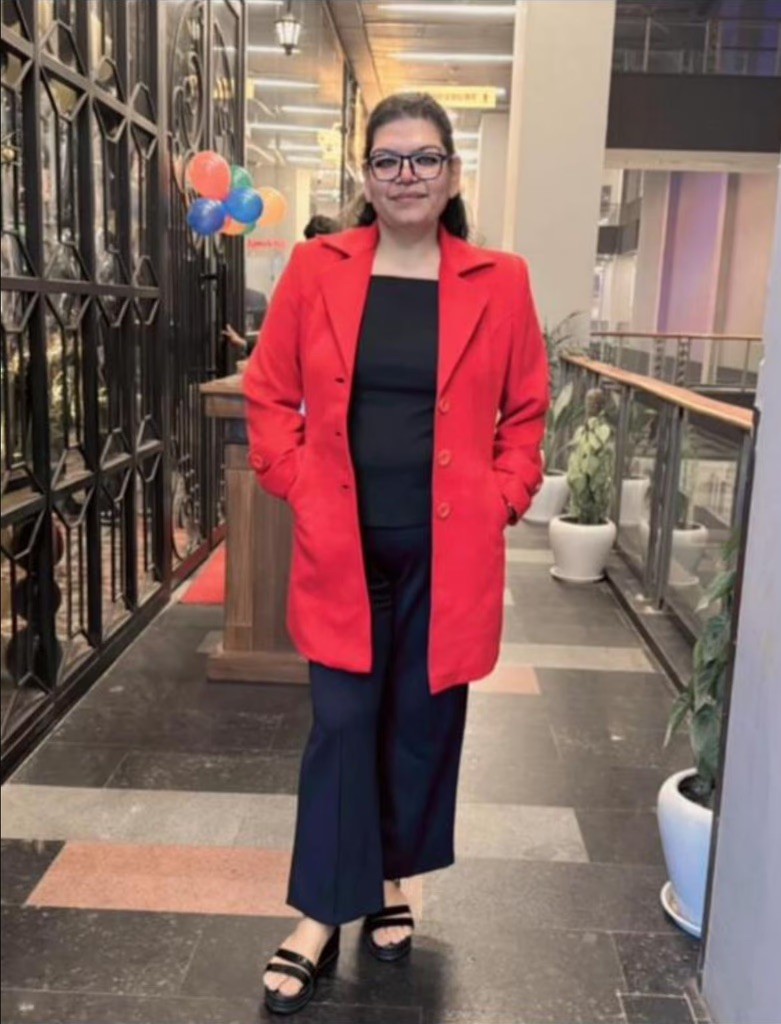
Educifly began with a simple problem. As an IB Mathematics educator, Richa saw bright students lose marks — not because they lacked ability, but because nobody taught them how the exam actually works. Good, specialist tutoring was hard to find, especially online.
She doesn’t teach Spanish herself. Instead, she hand-picks every tutor on our AP Spanish team, looking for the same thing she looks for in a math tutor: someone who knows the course deeply and can explain it simply. The goal is simple: a student in Phoenix, Toronto or Vienna gets the same quality of teaching as one in a big test-prep hub — one student at a time.
Richa Jain
Founder, Educifly · IB Mathematics Educator since 2010
WHERE WE TEACH
Online AP Spanish tutoring wherever AP is taught
Lessons are online, so where you live doesn’t decide who teaches you. These are the AP communities we work with most.
🇺🇸
United States
Miami, New York, New Jersey, Boston, Washington DC and Northern Virginia, Atlanta, Chicago, Houston, Dallas, Austin, San Antonio, Phoenix, Los Angeles, San Diego and the Bay Area. Lessons in Eastern, Central, Mountain and Pacific time.
🇪🇺
Europe
London (the American School in London, ACS International Schools), Madrid (American School of Madrid), Barcelona (American School of Barcelona), Paris (American School of Paris), Brussels (International School of Brussels), The Hague (American School of The Hague), Vienna (American International School Vienna), plus Frankfurt, Munich, Zurich and Stockholm.
🇨🇦
Canada
Toronto, Vancouver, Calgary and Montreal.
🌎
Latin America
Mexico City (American School Foundation), Monterrey, Bogotá, Lima and São Paulo.
🌏
Middle East & Asia
Dubai (American School of Dubai), Abu Dhabi, Doha, Hong Kong, Singapore and Seoul.
Wherever you are, your lesson is one link away.
QUESTIONS, ANSWERED
AP Spanish tutoring, your questions answered
What does an AP Spanish tutor do?
An AP Spanish tutor teaches the AP Spanish Language and Culture course one-to-one and gets you ready for the May exam. At Educifly, that means speaking practice for the project presentation and Q&A, planning and feedback for the argumentative essay, and weekly listening and reading practice with real Spanish sources. Every lesson is live and online.
What is on the AP Spanish Language and Culture exam?
The exam has two sections, each worth 50%. Section I is free response: a project presentation (20%), a project Q&A with four questions (15%) and an argumentative essay (15%). Section II is multiple choice: 25 listening questions and 30 reading questions, with 40 minutes for each part.
What changed on the AP Spanish exam?
College Board revised the course and exam. The email reply, the simulated conversation and the cultural comparison are gone. In their place is a course project, tested by a presentation and a Q&A on exam day. The argumentative essay stays. The exam is now fully digital, and free response comes before multiple choice.
Is the AP Spanish exam digital?
Yes. AP Spanish Language and Culture is a fully digital exam, taken in the College Board’s Bluebook app. You read, listen and type on screen, and you speak your presentation and answers into a wired headset with a microphone. Paper exams are no longer used. We practice on screen with a headset so it feels normal.
What is the AP Spanish course project?
The course project is research you do in Spanish before the exam, on a theme College Board sets each year. You read and listen to Spanish-language sources and plan a presentation. On exam day you give a three-minute presentation about what you learned and answer four questions about it.
What is the Personalized Project Reference (PPR)?
The PPR is a short outline of your project presentation. You submit it through the AP Digital Portfolio by the deadline in late April, and you get a printed copy to use on exam day. It’s a guide to keep you on track, not a script to read out.
Can a tutor help with the AP Spanish project?
Yes, within the rules. A tutor can help you understand the theme, find and read Spanish sources, learn the vocabulary you need and practice your presentation and answers out loud. College Board says the project must be your own work, so your tutor won’t write your presentation or your outline for you.
How long is the AP Spanish exam?
The AP Spanish Language and Culture exam takes about two and a half hours. The free-response section takes 65 to 70 minutes, including 55 minutes for the argumentative essay. The multiple-choice section takes 80 minutes: 40 minutes of listening and 40 minutes of reading.
How do I get better at the AP Spanish listening section?
Listen to real Spanish every week — podcasts, news and interviews from different countries — and answer questions about the main idea before the details. Don’t translate word by word. Our tutors build a listening routine with audio at real speed, so the 25 listening questions feel familiar.
How do I write a better AP Spanish argumentative essay?
Read the question first, take notes on both listens of the audio, and pick a clear side. Back each reason with a source and explain how it supports your view. Use linking words like “sin embargo” and “por lo tanto”, and save time at the end to check verb endings and accents.
Do you tutor heritage speakers?
Yes. Many AP Spanish students speak Spanish at home. They usually understand the listening well but lose points on written accents, spelling, formal vocabulary and essay structure. We focus on those, so a strong speaker becomes a strong writer too.
Do you tutor AP Spanish Literature and Culture?
Yes. AP Spanish Literature and Culture is a separate course built on a reading list of Spanish and Latin American texts. Its exam keeps its own format of multiple choice and four free-response questions, and it is also taken in Bluebook. Tell us which course you’re taking in the free trial.
When should my child start AP Spanish tutoring?
The best time is early in the fall, before the project packet arrives in January. Many families start in winter, when the project begins. Starting in spring still works — we focus on the project presentation and Q&A first, because together they are worth 35% of the score.
How much does an online AP Spanish tutor cost?
Educifly’s 1-on-1 online AP Spanish tutoring costs $50–$150 USD per 60-minute session. Your rate depends on your tutor’s experience, your current level and whether you book an exam crash course. The first trial lesson is free and lasts 30 minutes. You can pay as you go, or buy a package for a lower price per session. Invoices are issued in your local currency, there are no hidden fees, and you can cancel anytime.
Why does AP Spanish tutoring range from $50 to $150 per hour?
Three things set the rate. Tutor experience: a more experienced tutor costs more, and the most experienced specialists sit at the top of the range. Level: your current level shapes where you sit in the range. Timing: intensive pre-exam crash courses cost more than regular weekly lessons. We confirm your exact rate after the free trial, once your tutor is matched.
Do you offer package discounts on AP Spanish tutoring?
Yes. You can pay as you go, session by session, or buy a package, which lowers your price per session. We share package options after your free trial, once we know how many sessions a week you need. Prices are listed in USD and invoices are issued in your local currency.
Do you tutor AP Spanish students outside the US?
Yes. We teach AP Spanish students at American and international schools in Canada, Europe, Latin America, the Middle East and Asia, including London, Madrid, Paris, Brussels, Mexico City and Dubai. Lessons are scheduled in your local time zone.
What happens in the free trial lesson?
Your tutor has a short conversation with you, tries a quick listening task and looks at a recent piece of writing. You find out which skills are costing you points and leave with a clear plan. You decide afterward whether to continue. No card, no contract, no pressure.
What if my tutor isn’t the right fit?
Tell us, and we’ll match you with another AP Spanish specialist. Feeling relaxed matters a lot when you’re learning to speak, so we’d rather change early than let lessons drift.
Ready to speak AP Spanish with confidence?
Book a free trial lesson. We’ll talk with you, find the skills costing you points, and show you exactly how we’d help — no cost, no commitment.
✓
A Spanish specialist who knows the new exam
✓
A clear plan for the project, the essay and the listening
✓
Timed speaking practice with a headset from lesson one
No card. No contract. No pressure.