ONLINE AP CHEMISTRY TUTORING
Online AP Chemistry tutoring
that turns confusion into a 5
Educifly is an online AP Chemistry tutoring service. We match each student with a chemistry specialist for live one-to-one lessons that follow your class, fix weak units, and build up to the May exam. Every lesson mixes the ideas, the calculations and real free-response practice, because that is where most AP Chemistry points are won or lost.
Free trial lesson · No card · No contract · No pressure
Built for AP Chemistry students across the US and Canada — and at American and international schools in London, Munich, Paris, Madrid, Dubai and Singapore.
Teaching since 2018
Families in 12 countries
Free trial, no card
AP EXAM · SCORED 1 TO 5
Every lesson is mapped to the score you’re aiming for.
1
2
3
4
5
✓
A 5 can earn college credit — that’s what we build toward.
Two sections — multiple choice + free response. We drill both.
9 units
Every AP Chemistry unit, atoms to electrochemistry
1:1
One student, one tutor
7 FRQs
The free-response set, practiced until it feels routine
THE REAL CHALLENGE
AP Chemistry isn’t about memorizing reactions — it’s about explaining them, step by step
Most students don’t lose AP Chemistry points because they forgot a fact. They lose them because the exam wants three things at once: the right chemistry, clean math, and a clear reason for every answer. Most classes don’t have time to practice all three together.
START HERE
AP Chemistry and its exam, explained in plain English
One College Board course, nine units, and a two-part exam. Here is what it covers and how it’s scored.
The AP Chemistry exam at a glance
Questions
60
7 (3 long + 4 short)
Time
1 hour 30 minutes
1 hour 45 minutes
Share of score
50%
50%
Points
1 per question
Long: 10 each · Short: 4 each (46 total)
Where you answer
Bluebook app
Handwritten paper booklet
Provided
Equations and constants tables, periodic table
Equations and constants tables, periodic table
Wondering how tough the course really is before you sign up? Our honest guide to how hard AP Chemistry is walks through it. Or tell us your school and your last test score, and we’ll talk it through in your free trial.
WHY ONLINE WORKS
Online AP Chemistry tutoring, one-to-one on a shared screen
Chemistry is learned by working problems line by line, with someone who catches the slip the moment it happens. A shared whiteboard does exactly that. Searching for an AP Chemistry tutor near me makes sense — but the best chemistry tutor for your course is rarely on your street. Online, your choice isn’t limited by your zip code.
A chemistry specialist, wherever you live
In Chicago, Calgary or Munich, you learn with someone who teaches AP Chemistry week in, week out — not a general tutor who covers it now and then.
The same problem, on the same screen
We draw Lewis structures, build ICE tables and sketch titration curves together. Your tutor sees each line you write and catches mistakes at step two, not at the end.
Built around your weak units
No re-teaching what you already know. A short diagnosis shows which units and habits cost you points, and that’s where the lessons go.
Lessons that fit a busy year
Around school, labs, sports, other APs and the SAT. Evening and weekend slots in US time zones, plus after-school times in Europe and the Gulf.
HOW IT WORKS
From your first lesson
to a calm test day
A simple path, shaped around your course, your school’s pace and the score you’re aiming for.
1
Free trial and diagnosis
We look at a recent test or lab report, work a few problems together, and find the units and habits that are costing you points.
2
Your plan
A week-by-week plan matched to your school’s unit order and the May exam, with extra time on the units worth the most.
3
Weekly one-to-one lessons
Each lesson mixes the idea, worked calculations and real free-response practice. You leave knowing exactly what to practice before next time.
4
The exam run-in
From early spring: timed multiple-choice sets, full free-response sets, and a last pass on your weakest units, until test day feels familiar.
A typical AP Chemistry year with us
FALL
Units 1 to 3: atoms, bonding, and the properties of substances and mixtures. We lock in moles and Lewis structures early, and help with homework, lab reports and unit tests along the way.
WINTER
Units 4 to 7: reactions, kinetics, thermochemistry and equilibrium. Free-response practice starts here, one kind of question at a time.
MARCH
Units 8 and 9: acids and bases, then thermodynamics and electrochemistry. Timed free-response sets begin.
APRIL TO EARLY MAY
Full practice exams, short-answer drills, and a last pass on your weakest units.
STARTING LATE?
We shrink the plan around the units and question types worth the most points — starting with Unit 3 and acids and bases.
WHAT WE COVER
Every AP Chemistry unit,
and where students lose points in each
AP Chemistry has nine units. Here’s what each one covers, its share of the multiple-choice section, and the mistake we see most often — because knowing where points go is half the battle.
UNIT 1
7–9%
Atomic Structure and Properties
Moles and molar mass, mass spectra, electron configurations, photoelectron spectroscopy and periodic trends.
Where points go: explaining a trend with “it’s further to the right” instead of the pull between the nucleus and the electrons.
UNIT 2
7–9%
Compound Structure and Properties
Ionic, covalent and metallic bonds, Lewis structures, formal charge, resonance and molecular shape.
Where points go: a Lewis structure with the wrong number of electrons, which throws off the shape and everything after it.
UNIT 3
18–22%
Properties of Substances and Mixtures
Intermolecular forces, solids and liquids, gases, solutions, separating mixtures and spectroscopy.
Where points go: saying bonds break when a liquid boils — it’s the forces between molecules that break. This is the biggest unit, so it gets the most time.
UNIT 4
7–9%
Chemical Reactions
Balanced and net ionic equations, stoichiometry, titrations, and acid-base, redox and precipitation reactions.
Where points go: leaving spectator ions in a net ionic equation, or balancing atoms but not charge.
UNIT 5
7–9%
Kinetics
Reaction rates, rate laws, half-life, reaction mechanisms and catalysts.
Where points go: taking the order of a reaction from the balanced equation instead of from the data.
UNIT 6
7–9%
Thermochemistry
Heat and energy, calorimetry, enthalpy, bond enthalpies and Hess’s law.
Where points go: a wrong sign on the heat, or mixing up joules and kilojoules.
UNIT 7
7–9%
Equilibrium
The equilibrium constant, Q versus K, ICE tables, Le Châtelier’s principle and solubility.
Where points go: putting solids or pure liquids into the K expression, or reading Q versus K the wrong way round.
UNIT 8
11–15%
Acids and Bases
pH and pOH, strong and weak acids, buffers, titration curves and pKa.
Where points go: treating a weak acid like a strong one, and missing that pH equals pKa at the half-equivalence point.
UNIT 9
7–9%
Thermodynamics and Electrochemistry
Entropy, Gibbs free energy, the link between free energy and K, and galvanic and electrolytic cells.
Where points go: mixing joules and kilojoules in free-energy problems, and multiplying a cell potential by the equation’s coefficients.
The free-response questions we drill
The seven free-response questions follow familiar patterns. We practice each kind until the setup feels automatic.
The three long questions (10 points each)
Each one walks through a single big idea in many small parts: a calculation, a diagram, a prediction and a written reason. They often start from a lab or a data table.
The four short questions (4 points each)
Quick and focused: one experiment, one particle diagram, or one calculation with a short explanation.
Lab and data questions
Read an experiment you’ve never seen, spot the variables, find the error, and say what it does to the result.
Particle diagrams and models
Draw what the molecules or ions are doing, then explain it in a sentence.
Calculations with units
Stoichiometry, gas laws, equilibrium, pH and energy, with every unit and step shown.
Claim, evidence, reason
Make a claim, back it with data or a rule, and explain the link. This is where most points slip away.
Labs and the reference tables
AP Chemistry is a lab course, and the exam often describes an experiment you haven’t done yourself. We go back over the classic lab skills — titrations, calorimetry, spectroscopy, kinetics runs and separating mixtures — and train you to read any setup and pick out what was measured and what could go wrong. We also practice with the College Board’s tables of equations and constants and the periodic table all year, so on test day you know exactly where everything is.
Stuck on a unit right now? Bring your last test or lab report to the free trial and we’ll work through it together.
No card. No contract. No pressure.
Book a Free AP Chemistry Trial →
YOUR TUTOR
AP Chemistry tutors who
teach chemistry every week
You’re matched with a chemistry specialist, not a generalist covering five subjects. Our AP Chemistry tutors come from the same team that teaches IB Chemistry and IGCSE Chemistry, so moles, equilibrium and electrochemistry are everyday work for them.
WHO IT'S FOR
Built for every kind of AP Chemistry student
From the student who’s lost after the first unit test to the one chasing a 5, there’s a plan for you.
The student who’s fallen behind
Lost after moles or bonding, and worried it will snowball. We rebuild the basics, one unit at a time, so the rest of the year makes sense.
The student who gets it in class but blanks on the exam
Fine on homework, stuck on timed free-response. We practice the setup and the written reasons until they come automatically.
The future pre-med or engineering major
Chemistry is coming in college either way. A strong AP year builds the habits — and many colleges give credit for a good score.
The summer starter
Getting ahead before the course begins. A few weeks on moles, equations and algebra turns a hard first unit into a head start.
The international-school student
Taking AP at an American school in London, Munich, Dubai or Singapore, or switching over from IB or IGCSE Chemistry. We teach the AP course and the AP exam, in your time zone.
Taking more than one science or math AP? We also offer AP Biology tutoring, AP Physics tutoring and AP Calculus tutoring. Or browse all our AP tutoring.
WHY EDUCIFLY
A specialist AP Chemistry tutor vs. the usual options
Most chemistry help isn’t built around the AP exam. Here’s the honest difference.
Knows all nine AP units and their weights
✓
EDUCIFLY
Yes
TUTORING MARKETPLACE
Depends who you book
VIDEOS AND APPS
Covers topics, not your course
Free-response coaching (long and short)
✓
EDUCIFLY
Every week
TUTORING MARKETPLACE
Hit or miss
VIDEOS AND APPS
No feedback
Lab and data questions practiced
✓
EDUCIFLY
Built into every plan
TUTORING MARKETPLACE
Rarely planned
VIDEOS AND APPS
Up to you
Matched to your school’s pace
✓
EDUCIFLY
Yes
TUTORING MARKETPLACE
Sometimes
VIDEOS AND APPS
No
Same tutor every week
✓
EDUCIFLY
Yes
TUTORING MARKETPLACE
Not always
VIDEOS AND APPS
—
Plan built from a diagnosis
✓
EDUCIFLY
Yes, from the free trial
TUTORING MARKETPLACE
Rarely
VIDEOS AND APPS
No
Want to see the difference for yourself? A free trial shows you exactly how we’d teach your toughest unit.
No card. No contract. No pressure.
Book a Free Trial Class →
Pricing
AP Chemistry tutoring from
$50 to $150 per hour
1-on-1 online AP Chemistry tutoring at Educifly costs $50–$150 USD per 60-minute session. Where you sit in that range depends on three things — and your first lesson is free.
Tutor experience
Rates depend on your tutor's experience: a more experienced tutor costs more, and the most experienced AP specialists sit at the top of the range.
Level and pathway
Your rate also reflects your current level in AP Chemistry.
Crash courses
Intensive pre-exam programs in the weeks before the May AP exams are priced above regular weekly lessons.
Included at every rate
1-on-1 live online lessons. Past-style questions under timed conditions.
Prices are in USD; invoices are issued in your local currency. Pay as you go, or buy a package for a lower price per session — no hidden fees, cancel anytime. We share package options after your free trial. Prices last updated: October 2026.
Book a free trial →
WHAT FAMILIES SAY
Real progress,
in real students’ words
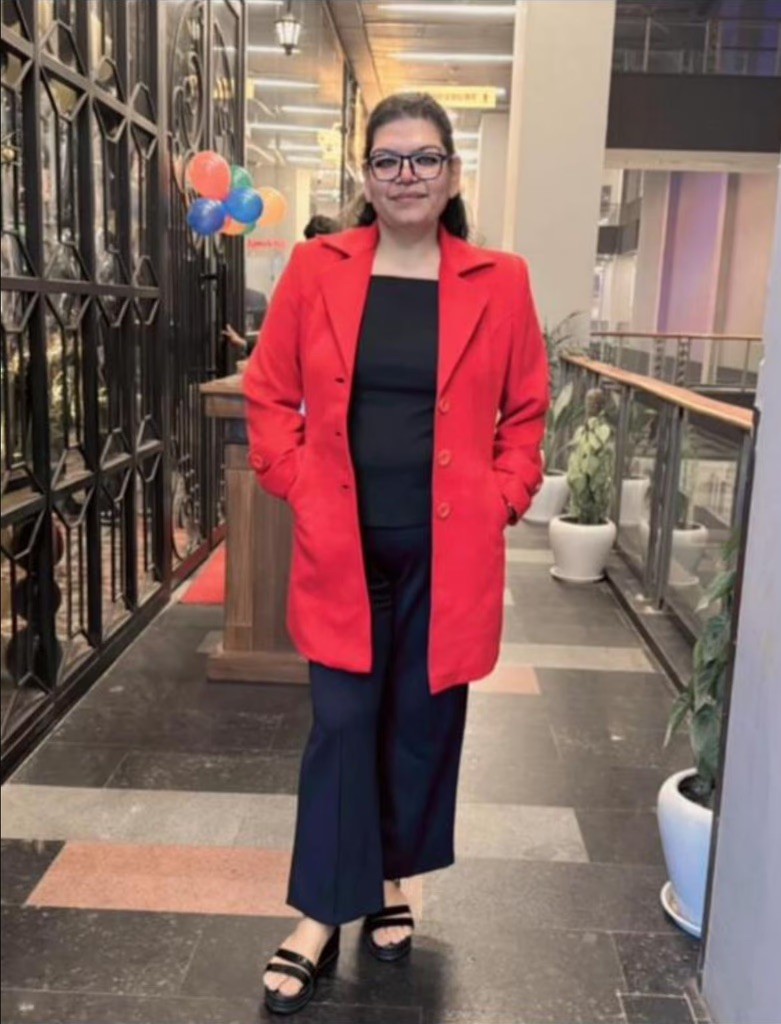
WHY WE EXIST
Richa Jain
Founder, Educifly · IB Mathematics Educator since 2010
Educifly began with a simple problem. As an IB Mathematics educator, Richa saw bright students lose marks — not because they lacked ability, but because nobody taught them how the exam actually works. Good, specialist tutoring was hard to find, especially online.
She built Educifly to fix that in every subject. For AP Chemistry, that means hand-picking chemistry specialists herself and holding them to the same standard she sets for her own math teaching. A student in Atlanta, Toronto or Madrid gets the same quality of teaching as one in a big test-prep hub — one student at a time.
WHERE WE TEACH
Online AP Chemistry tutoring
wherever AP is taught
Lessons are online, so where you live doesn’t decide who teaches you. These are the AP communities we work with most.
United States
New York, New Jersey, Boston, Washington DC and Northern Virginia, Atlanta, Chicago, Houston, Dallas, Austin, the Bay Area, Los Angeles and Seattle. Lessons in Eastern, Central, Mountain and Pacific time.
Canada
Toronto, Vancouver and Calgary.
Europe
London (the American School in London, ACS International Schools, TASIS England), Munich (Munich International School), Frankfurt (Frankfurt International School), Paris (American School of Paris), Madrid (American School of Madrid), The Hague (American School of The Hague), plus Brussels, Vienna, Zurich and Stockholm.
Middle East & Asia
Dubai (American School of Dubai), Abu Dhabi, Doha, Singapore (Singapore American School), Hong Kong (Hong Kong International School) and India’s international schools in Mumbai, New Delhi and Bengaluru.
Wherever you are, your lesson is one link away.
QUESTIONS, ANSWERED
AP Chemistry tutoring,
your questions answered
What does an AP Chemistry tutor do?
An AP Chemistry tutor teaches the College Board course one-to-one and gets you ready for the May exam. At Educifly, that means fixing weak units, practicing the long and short free-response questions, and training you to show your units and explain your answers. Every lesson is live and online.
Do you tutor all nine AP Chemistry units?
Yes. We cover every unit: atomic structure, compound structure, properties of substances and mixtures, chemical reactions, kinetics, thermochemistry, equilibrium, acids and bases, and thermodynamics and electrochemistry. Your tutor follows your school’s order, so lessons line up with class and your next test.
Which AP Chemistry units do students find hardest?
Equilibrium, acids and bases, and thermodynamics cause the most trouble, because they stack math on top of ideas you can’t see. Properties of substances and mixtures also matters a lot, since it is the biggest unit on the multiple-choice section. For a longer answer, read our honest guide to how hard AP Chemistry is.
How is the AP Chemistry exam structured?
The exam has two sections, each worth 50% of your score. Section I has 60 multiple-choice questions in 1 hour 30 minutes. Section II has seven free-response questions in 1 hour 45 minutes: three long questions worth 10 points each and four short questions worth 4 points each. Your final score is reported from 1 to 5.
What do the AP Chemistry free-response questions ask?
They ask you to do the chemistry and explain it. Expect calculations with units, particle diagrams, questions about an experiment and its data, and short written reasons for your claims. The three long questions mix several of these in one problem; the four short ones each focus on one.
Can I use a calculator on the AP Chemistry exam?
Yes. Under the College Board’s current calculator policy, you can use a scientific or graphing calculator, and the Bluebook app also has a built-in Desmos calculator. Tables of common equations and constants are provided, along with a periodic table. Check the College Board’s calculator rules before test day.
Is the AP Chemistry exam on paper or digital?
It’s a hybrid digital exam. You answer the multiple-choice questions and read the free-response questions in the College Board’s Bluebook app, then handwrite your free-response answers in a paper booklet. We practice both ways, so neither feels new on test day.
How much math is in AP Chemistry?
A fair amount, but it’s algebra, not calculus. You’ll use ratios, logarithms for pH, scientific notation and rearranging equations, all with careful units. Most math mistakes in AP Chemistry are unit slips, like mixing grams and moles or joules and kilojoules, and steady practice fixes them.
Can you help with AP Chemistry labs?
Yes. We go back over the classic lab skills, like titrations, calorimetry, spectroscopy and reaction-rate experiments, and help with lab reports during the year. The exam often describes an experiment you haven’t done, so we train you to read any setup and spot the variables, the errors and their effect.
When should my child start AP Chemistry tutoring?
The best time is early in the fall, before the first unit test, or over the summer before the course starts. Many families start in winter, when grades slip on equilibrium or acids and bases. Starting in spring still works — we focus on the units and question types worth the most points.
How many AP Chemistry lessons a week does a student need?
Most students do one hour a week, which is enough to stay ahead of class and fix problems while they’re small. Students catching up often do two. In the weeks before the May exam, families usually add timed practice sessions.
How much does an online AP Chemistry tutor cost?
Educifly’s 1-on-1 online AP Chemistry tutoring costs $50–$150 USD per 60-minute session. Your rate depends on your tutor’s experience, your current level and whether you book an exam crash course. The first trial lesson is free and lasts 30 minutes. You can pay as you go, or buy a package for a lower price per session. Invoices are issued in your local currency, there are no hidden fees, and you can cancel anytime.
Why does AP Chemistry tutoring range from $50 to $150 per hour?
Three things set the rate. Tutor experience: a more experienced tutor costs more, and the most experienced specialists sit at the top of the range. Level: your current level shapes where you sit in the range. Timing: intensive pre-exam crash courses cost more than regular weekly lessons. We confirm your exact rate after the free trial, once your tutor is matched.
Do you offer package discounts on AP Chemistry tutoring?
Yes. You can pay as you go, session by session, or buy a package, which lowers your price per session. We share package options after your free trial, once we know how many sessions a week you need. Prices are listed in USD and invoices are issued in your local currency.
Is online AP Chemistry tutoring as good as in-person?
For chemistry, it’s often better. A shared whiteboard lets your tutor see every line you write, draw particle diagrams with you and catch mistakes as they happen. And online, you can work with a true AP Chemistry specialist instead of whoever happens to live nearby.
Do you tutor AP Chemistry students outside the US?
Yes. We teach AP Chemistry students in Canada and at American and international schools in Europe, the Middle East and Asia, including London, Munich, Paris, Madrid, Dubai and Singapore. Lessons are scheduled in your local time zone.
Can you help if my child is switching from IB or IGCSE Chemistry to AP?
Yes. Much of the content carries over, but AP Chemistry asks questions its own way, with more weight on particle-level reasons, lab data and multi-step calculations. Our chemistry team also teaches IB and IGCSE Chemistry, so they know exactly what carries over and what’s new.
What happens in the free trial lesson?
Your tutor works through a few problems with you, looks at a recent test or lab report if you have one, and finds the units and habits costing you points. You leave with a clear plan, and you decide afterward whether to continue. No card, no contract, no pressure.
What if my tutor isn’t the right fit?
Tell us, and we’ll match you with another AP Chemistry specialist. The fit between student and tutor matters a lot, so we’d rather change early than let lessons drift.
Ready to make
AP Chemistry click?
Book a free trial lesson. We’ll find your level, look at your toughest unit, and show you exactly how we’d help — no cost, no commitment.
✓
A chemistry specialist matched to your AP course
✓
A clear plan for your weak units and the free-response
✓
Real exam-style practice from lesson one
No card. No contract. No pressure.