ONLINE AP ENGLISH LANGUAGE TUTORING
AP Language and Composition tutoring, one-to-one, for the three essays that decide your score
Educifly is an online AP English Language tutoring service. Your AP Language and Composition tutor is an English specialist who works with you live, one-to-one, on the three essays — synthesis, rhetorical analysis and argument — and on the reading and writing questions in the multiple choice. We tutor AP Literature too.
Free trial lesson · No card · No contract · No pressure
Built for AP students across the US and Canada — and at American and international schools in London, The Hague, Paris, Brussels, Dubai and Singapore.
Teaching since 2018
Families in 12 countries
Free trial, no card
SAMPLE ESSAY
Rhetorical analysis · scored on the 6-point rubric
3 / 6
ROW A
Thesis
One clear, arguable claim
1 of 1
ROW B
Evidence & commentary
How your evidence proves your point
2 of 4
ROW C
Sophistication
Complex thinking across the whole essay
0 of 1
Most of the missing points are in Row B: commentary.
Synthesis
Rhetorical analysis
Argument
3 essays
Synthesis, rhetorical analysis, argument
6 points
Per essay, and we train every row
Lang · Lit
Both AP English courses
THE REAL CHALLENGE
Lots of strong readers still get stuck on a 3 in AP Lang
AP Lang doesn’t test whether you liked the reading. It tests whether you can explain how a writer persuades — and then persuade someone yourself, fast, three times in one sitting. Good students lose points here not because they can’t write, but because nobody showed them what the graders are looking for.
01
The thesis just repeats the prompt
A thesis has to take a clear position someone could argue with. “The author uses many rhetorical devices” isn’t one, and it costs the first point straight away.
02
Summary instead of commentary
Four of the six points come from explaining how your evidence proves your point. Retelling the passage, or listing “ethos, pathos, logos”, earns very little of that.
03
Three essays, one clock
Synthesis, rhetorical analysis and argument back to back, with sources to read first. Students who write slowly run out of time on the third essay, and it shows.
04
The writing questions feel like guesswork
About half the multiple choice asks how to improve a draft: which sentence to add, cut or move. It’s a skill you can practice, but most classes skip it.
START HERE
AP English Language and Composition, explained in plain English
One course, one exam, one rubric used for every essay. Here’s what you need to know before your first lesson.
What is AP English Language and Composition?
AP English Language and Composition — “AP Lang” — is a College Board course in reading and writing nonfiction. Students study how writers build arguments: their claims, evidence, structure and style. They then write their own arguments. It matches a first-year college writing course. The course has nine units, and the exam is scored from 1 to 5.
How the AP Lang exam works
The AP Lang exam is fully digital and taken in the College Board’s Bluebook app. It lasts 3 hours and 15 minutes. Section I is multiple choice: one hour, worth 45% of your score, with reading questions on nonfiction passages and writing questions about revising drafts. Section II is three essays — synthesis, rhetorical analysis and argument — in 2 hours and 15 minutes, including a 15-minute reading period. It’s worth 55%.
How AP Lang essays are scored
Each of the three essays is scored out of 6 points using the same rubric. Thesis is worth 0–1 point: a clear, arguable claim that answers the prompt. Evidence and commentary is worth 0–4 points: how well you choose evidence and explain how it supports your claim. Sophistication is worth 0–1 point: writing that shows complex thinking across the whole essay.
AP LANG OR AP LIT: THE SHORT VERSION
AP English Language (Lang)
WHAT YOU READ
Nonfiction: speeches, essays, letters, articles
WHAT YOU WRITE
Synthesis, rhetorical analysis, argument
MULTIPLE CHOICE
Reading and revising writing
ESSAY RUBRIC
6 points each: thesis, evidence and commentary, sophistication
EXAM
Fully digital, 3 h 15 min
AP English Literature (Lit)
WHAT YOU READ
Fiction, poetry and drama
WHAT YOU WRITE
Poetry analysis, prose fiction analysis, literary argument
MULTIPLE CHOICE
Reading poems and prose passages
ESSAY RUBRIC
The same 6-point rubric
EXAM
Fully digital, 3 h
Taking IB English instead, or choosing between programs? Our IB vs AP guide explains the difference. Or tell us your school and your last essay score, and we’ll talk it through in your free trial.
WHY ONLINE WORKS
Online AP English tutoring, built around how essays get better
Essays improve when someone reads your draft line by line and tells you exactly which sentence is doing the work and which one isn’t. A shared document does that perfectly. Searching for an AP English tutor near me makes sense — but the best AP Lang tutor for you is rarely on your street. Online, your choice isn’t limited by your zip code.
🌍
An English specialist, wherever you live
In Boston, Toronto or Brussels, you work with someone who teaches essay writing and close reading every week — not a general tutor who covers English now and then.
💬
Feedback on the page, as you write
You type, your tutor comments in the margin in real time. A weak thesis gets fixed in the first paragraph, not after the whole essay is done.
⏱️
Practice the way the exam feels
The exam is typed in Bluebook, so we time essays in a plain editor too: no spell-check help, no fancy formatting, just you and the prompt.
🗓️
Lessons that fit a busy junior year
Around school, sports, other APs and the SAT. Evening and weekend slots in US time zones, plus after-school times in Europe and the Gulf.
HOW IT WORKS
From your first essay to a calm test day
A simple path, shaped around your class, your school’s reading list and the score you’re aiming for.
STEP 1
Free trial and diagnosis
We read a recent essay with you, try a short timed task, and find the exact rubric rows and habits that are costing you points.
STEP 2
Your plan
A week-by-week plan matched to your school’s units, your course (Lang, Lit or both) and the May exam.
STEP 3
Weekly one-to-one lessons
Each lesson mixes one skill, a model paragraph and real essay practice. You leave knowing exactly what to work on before next time.
STEP 4
The exam run-in
From early spring: timed essays, full multiple-choice sets and practice exams, until test day feels familiar.
A typical AP Lang year with us
SEPTEMBER AND OCTOBER
The rhetorical situation: who is writing, to whom, and why. We fix the thesis first, because it’s the fastest point to win.
NOVEMBER AND DECEMBER
Rhetorical analysis. Moving from “the writer uses imagery” to “the writer uses imagery to make readers feel…, which…”.
JANUARY AND FEBRUARY
Argument and synthesis. Building a line of reasoning and using sources without letting them take over.
MARCH
Timed essays, one type at a time, plus the writing questions in the multiple choice.
APRIL TO EARLY MAY
Full practice exams, all three essays back to back, and a last pass on whichever rubric row is still weakest.
STARTING LATE?
We shrink the plan to the thesis and commentary habits worth the most points, and drill the essay type you find hardest.
WHAT WE COVER
Every AP Lang skill and essay, and where students lose points in each
The AP Lang course is built around four reading-and-writing skill areas. Here is each one, its share of the multiple-choice section, and the mistake we see most often — because knowing where points go is half the battle.
SKILL 1
Rhetorical situation
Reading 11–14%
Writing 11–14%
Who the writer is, who they’re talking to, what they want, and why they wrote it then.
WHERE POINTS GO
Naming the audience but not explaining how it shapes the writer’s choices.
SKILL 2
Claims and evidence
Reading 13–16%
Writing 11–14%
Spotting a writer’s main claim and the evidence behind it, and choosing strong evidence of your own.
WHERE POINTS GO
Quoting a line, then moving on without saying what it proves.
SKILL 3
Reasoning and organization
Reading 13–16%
Writing 11–14%
How an argument is ordered, and how ideas link from one paragraph to the next.
WHERE POINTS GO
Body paragraphs that each make a point but don’t build a line of reasoning toward the thesis.
SKILL 4
Style
Reading 11–14%
Writing 11–14%
Word choice, sentence shape and tone, and how they help persuade.
WHERE POINTS GO
Listing devices (“anaphora, diction, tone”) without connecting them to the writer’s purpose.
The three essays we drill
Each essay has its own job and its own trap. We practice them one at a time, then together under time.
ESSAY 1
Synthesis essay
You read a set of short sources on one topic — including at least one visual, like a chart or image — and write an argument that uses at least three of them.
WHERE POINTS GO
Summarizing each source in turn instead of making your own argument and using the sources as backup.
ESSAY 2
Rhetorical analysis essay
You read a nonfiction passage and explain how the writer’s choices help them achieve their purpose.
WHERE POINTS GO
Spotting devices without explaining what they do for this audience.
ESSAY 3
Argument essay
You take a position on a claim and support it with your own evidence: reading, history, current events or experience.
WHERE POINTS GO
Vague, general examples, and only one side of a complex issue.
THE 6-POINT RUBRIC, ROW BY ROW
ROW A
Thesis (0–1)
One clear, arguable claim that answers the prompt.
WHERE POINTS GO
Restating the prompt, or a thesis that only appears in the last paragraph.
ROW B
Evidence and commentary (0–4)
The big one. Specific evidence plus clear explanation of how it supports your line of reasoning.
WHERE POINTS GO
More quotes than explanation. Lots of grammar slips that get in the way of meaning can also hold this row back.
ROW C
Sophistication (0–1)
Thinking that goes beyond the obvious: explaining tensions, limits or the bigger context, or a consistently vivid style.
WHERE POINTS GO
One fancy sentence at the end. The point is earned by the whole essay, not a single line.
The multiple choice, reading and writing
The multiple choice has two kinds of question, and we practice both.
READING QUESTIONS
Short nonfiction passages. What is the writer’s purpose? Why does this paragraph come here? What does this word choice suggest?
WRITING QUESTIONS
Draft passages someone is still revising. Which sentence best supports the claim? Where should this sentence go? What should be cut?
Where points go: answering from memory of the passage instead of going back to the line the question points to. The writing questions overlap with the Reading and Writing section of the SAT — so this practice helps both. If you’re preparing for the SAT too, see our SAT tutoring.
AP LITERATURE
AP Literature tutoring, for poetry, prose and the novel essay
AP English Literature and Composition — “AP Lit” — is the College Board’s course in reading fiction, poetry and drama. Its nine units rotate through three types of literature. Here is each one’s share of the AP Lit multiple-choice section:
42–49%
Short fiction
Character, setting, plot and narrator in short stories.
36–45%
Poetry
Speaker, structure, word choice, imagery and figurative language.
15–18%
Longer fiction or drama
Novels and plays: how characters and ideas develop across a whole work.
THE AP LIT EXAM
The AP Lit exam is fully digital and lasts 3 hours: one hour of multiple choice (45%), then three essays in two hours (55%) — a poetry analysis, a prose fiction analysis and a literary argument, where you choose a novel or play you know well and argue about it. All three essays use the same 6-point rubric as AP Lang.
POETRY ANALYSIS
PROSE FICTION ANALYSIS
LITERARY ARGUMENT
Where points go: retelling the plot instead of analyzing it, treating a poem line by line with no big idea, and walking into the literary argument without two or three works prepared in depth. Our AP Literature tutoring builds a small “toolkit” of novels and plays you know inside out, so the third essay never starts from zero.
YOUR TUTOR
AP English tutors who read and write with you every week
You’re matched with an English specialist, not a generalist covering five subjects. Our AP English tutors come from the same team that teaches IB English and IGCSE English — courses built on close reading and timed analytical writing — so rhetoric, argument and poetry are everyday work for them.
📖
Close-reading specialists
Comfortable across AP Lang and AP Lit, from a speech by a president to a sonnet, with the depth to answer the “but how do I say something new about it?” question.
🧾
They know how essays are scored
The 6-point rubric, what earns each row, and why one paragraph of real commentary beats three paragraphs of summary.
✍️
They teach you to write it yourself
Patient when you’re stuck at a blank page, demanding when you’re aiming for a 5, and focused on you writing clear, confident essays on your own.
WHO IT’S FOR
Built for every kind of AP English student
From the student who freezes at a blank page to the one chasing a 5, there’s a plan for you. Taking more than one AP? See all our AP tutoring.
The good writer stuck on a 3
Your essays are clear but “safe”. We work on commentary and line of reasoning — the four points in Row B — and on earning sophistication.
The student who runs out of time
Strong ideas, slow start. We practice planning in a few minutes and writing to a clock, so the third essay gets the same care as the first.
The AP Lit student
Poetry feels like a code, and the novel essay feels like a gamble. We build reading habits for poems and a short list of works you can write about with confidence.
The junior also taking the SAT
AP Lang’s writing questions and the SAT’s Reading and Writing section test many of the same skills. One plan can serve both.
The international-school student
Taking AP at an American school in London, Paris, Dubai or Singapore, switching over from IB or IGCSE English, or writing in English as a second language. We teach the AP course and the AP exam, in your time zone.
Not sure which one sounds like you?
Bring a recent essay to the free trial and we’ll work it out together.
Book a Free Trial Class →
WHY EDUCIFLY
A specialist AP English tutor vs. the usual options
Most essay help isn’t built around the AP rubric. Here’s the honest difference.
Educifly AP English tutor
KNOWS AP LANG AND AP LIT
✓ Yes — both
RUBRIC-ROW FEEDBACK ON YOUR ESSAYS
✓ Every week
TIMED, TYPED ESSAY PRACTICE
✓ Built into every plan
MATCHED TO YOUR SCHOOL’S READING LIST
✓ Yes
SAME TUTOR EVERY WEEK
✓ Yes
PLAN BUILT FROM A DIAGNOSIS
✓ Yes, from the free trial
A tutoring marketplace
KNOWS AP LANG AND AP LIT
Depends who you book
RUBRIC-ROW FEEDBACK ON YOUR ESSAYS
Hit or miss
TIMED, TYPED ESSAY PRACTICE
Rarely planned
MATCHED TO YOUR SCHOOL’S READING LIST
Sometimes
SAME TUTOR EVERY WEEK
Not always
PLAN BUILT FROM A DIAGNOSIS
Rarely
Videos and apps on your own
KNOWS AP LANG AND AP LIT
Covers topics, not your course
RUBRIC-ROW FEEDBACK ON YOUR ESSAYS
No feedback
TIMED, TYPED ESSAY PRACTICE
Up to you
MATCHED TO YOUR SCHOOL’S READING LIST
No
SAME TUTOR EVERY WEEK
—
PLAN BUILT FROM A DIAGNOSIS
No
Want to see the difference for yourself? In the free trial, we’ll take one of your essays and show you how we’d make it stronger.
No card. No contract. No pressure.
Book a Free Trial Class →
Pricing
AP English tutoring from
$50 to $150 per hour
1-on-1 online AP English tutoring at Educifly costs $50–$150 USD per 60-minute session. Where you sit in that range depends on three things — and your first lesson is free.
Tutor experience
Rates depend on your tutor's experience: a more experienced tutor costs more, and the most experienced AP specialists sit at the top of the range.
Level and pathway
Your rate also reflects your course: AP English Language, AP English Literature, or both.
Crash courses
Intensive pre-exam programs in the weeks before the May AP exams are priced above regular weekly lessons.
Included at every rate
1-on-1 live online lessons. Full practice exams before May. A new specialist if the fit isn’t right.
Prices are in USD; invoices are issued in your local currency. Pay as you go, or buy a package for a lower price per session — no hidden fees, cancel anytime. We share package options after your free trial. Prices last updated: October 2026.
Book a free trial →
WHAT FAMILIES SAY
Real progress, in real students’ words
“I always listed devices and wondered why I got a 3. Now I explain what each choice does for the reader, and my essays finally sound like arguments.”
AP LANG
AP Lang student
Brussels · AP English Language
“He used to run out of time on the argument essay. By May he was finishing all three with time to reread.”
AP LANG
AP parent
Seattle, WA · AP English Language
“Poetry questions scared me. My tutor gave me a way into every poem, and the literary argument stopped being a guessing game.”
AP LIT
AP Lit student
Toronto · AP English Literature
WHY WE EXIST
Hand-picked English specialists, one student at a time
Educifly began with a simple problem. As an IB Mathematics educator, Richa saw bright students lose marks — not because they lacked ability, but because nobody taught them how the exam actually works. Good, specialist tutoring was hard to find, especially online.
She doesn’t teach English herself. Instead, she hand-picks every tutor on our AP English team, looking for the same thing she looks for in a math tutor: someone who knows the course deeply and can explain it simply. The goal is simple: a student in Chicago, Toronto or Stockholm gets the same quality of teaching as one in a big test-prep hub — one student at a time.
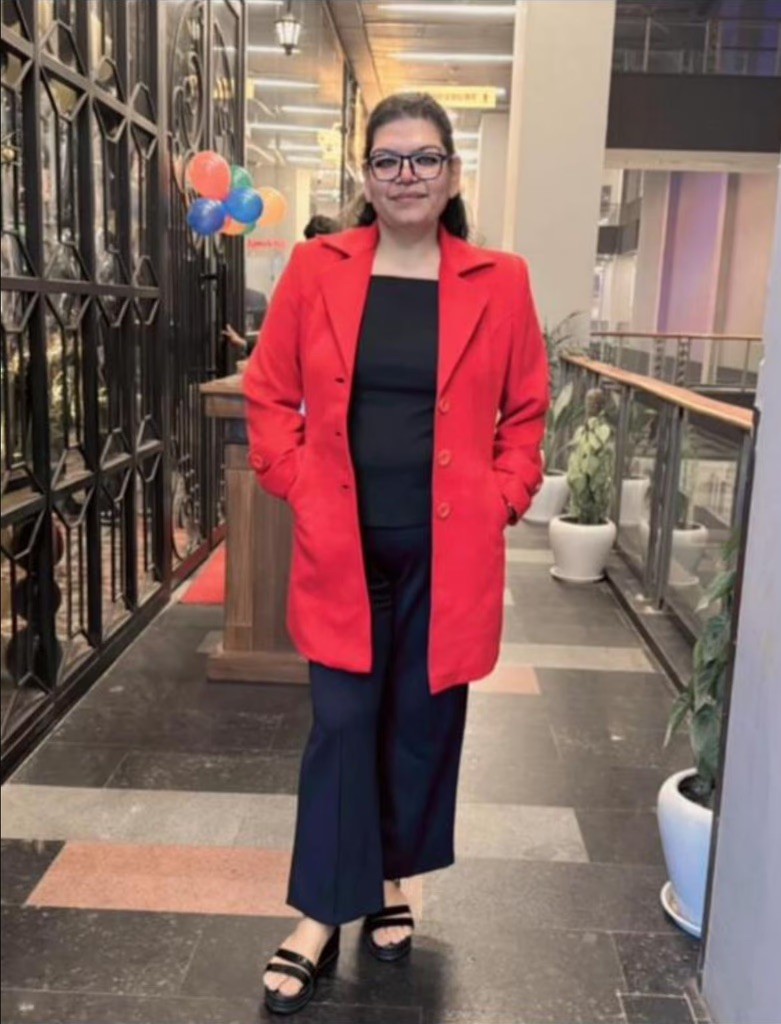
Richa Jain
Founder, Educifly · IB Mathematics Educator since 2010
WHERE WE TEACH
Online AP English tutoring wherever AP is taught
Lessons are online, so where you live doesn’t decide who teaches you. These are the AP communities we work with most.
United States
New York, New Jersey, Boston, Washington DC and Northern Virginia, Atlanta, Miami, Chicago, Houston, Dallas, Austin, the Bay Area, Los Angeles and Seattle. Lessons in Eastern, Central, Mountain and Pacific time.
Canada
Toronto, Vancouver, Montreal and Calgary.
Europe
London (the American School in London, ACS International Schools, TASIS England), The Hague (American School of The Hague), Paris (American School of Paris), Brussels (International School of Brussels), Madrid (American School of Madrid), Vienna (American International School Vienna), plus Frankfurt, Munich, Zurich and Stockholm.
Middle East & Asia
Dubai (American School of Dubai), Abu Dhabi, Doha (American School of Doha), Hong Kong (Hong Kong International School), Singapore (Singapore American School) and Seoul.
Wherever you are, your lesson is one link away.
QUESTIONS, ANSWERED
AP English tutoring, your questions answered
What does an AP Language and Composition tutor do?
An AP Language and Composition tutor teaches the AP Lang course one-to-one and gets you ready for the May exam. At Educifly, that means practicing the synthesis, rhetorical analysis and argument essays, giving feedback on every row of the 6-point rubric, and building the reading and revising skills the multiple choice tests. Every lesson is live and online.
What is on the AP English Language exam?
The exam has two sections. Section I is one hour of multiple choice, worth 45%, with reading questions on nonfiction passages and writing questions about revising drafts. Section II is three essays — synthesis, rhetorical analysis and argument — in 2 hours and 15 minutes, including a 15-minute reading period. It is worth 55%.
How are AP Lang essays scored?
Each essay is scored out of 6 using the same rubric. Thesis is worth 1 point, evidence and commentary is worth up to 4 points, and sophistication is worth 1 point. Your three essay scores and your multiple-choice score combine into a final AP score from 1 to 5.
How do I earn the sophistication point in AP Lang?
The sophistication point goes to essays that show complex thinking across the whole response. That might mean explaining tensions or limits in an argument, placing it in a bigger context, or writing in a consistently vivid style. A single clever sentence at the end isn’t enough. Most students earn it once their commentary is strong.
What is the AP Lang synthesis essay?
The synthesis essay gives you a set of short sources on one topic, including at least one visual, such as a chart or image. You write your own argument on the topic and use at least three of the sources to support it. The most common mistake is summarizing the sources instead of arguing.
How do I write a better rhetorical analysis essay?
Start with the writer’s purpose and audience, then explain how specific choices — word choice, examples, structure, tone — help achieve that purpose. Spotting a device isn’t enough. Graders reward commentary that explains what each choice does for this audience, in this situation.
Is the AP English Language exam digital?
Yes. AP English Language is a fully digital exam, taken in the College Board’s Bluebook app. You read the passages and answer the multiple choice on screen, and you type all three essays there too. We practice timed essays in a plain editor, so typing under time pressure feels normal on test day.
How long should each AP Lang essay take?
You get 2 hours and 15 minutes for all three essays, including a 15-minute reading period. That leaves about 40 minutes of writing per essay. Many students use the reading time on the synthesis sources. We help each student find a plan they can stick to.
Do you tutor AP Literature too?
Yes. We tutor AP English Literature and Composition, including the poetry analysis, prose fiction analysis and literary argument essays. Students get help reading poems with confidence and preparing two or three novels or plays they can use for the literary argument.
Can AP Lang tutoring help with the SAT?
Yes, partly. AP Lang’s writing questions and the SAT’s Reading and Writing section both test how well you understand and improve a piece of writing. AP Lang practice builds those skills. For full SAT preparation, including math, see our SAT tutoring.
Will an AP English tutor write or edit my essays for me?
No. Your tutor coaches you to write better essays yourself: they explain what’s working, ask questions and show model paragraphs, but every word you hand in is yours. That keeps you inside your school’s rules, and it’s the only way to get better at writing under time on exam day.
When should my child start AP English tutoring?
The best time is early in the fall, before the first timed essays come back. Many families start in winter, when essay scores stall at 3 or 4. Starting in spring still works — we focus on the rubric rows and essay types worth the most points.
How many AP Lang lessons a week does a student need?
Most students do one hour a week, which is enough to write regularly and get feedback while habits are still forming. Students catching up, or taking both AP Lang and AP Lit, often do two. In the weeks before the May exam, families usually add timed practice sessions.
How much does an online AP English tutor cost?
Educifly’s 1-on-1 online AP English tutoring costs $50–$150 USD per 60-minute session. Your rate depends on your tutor’s experience, your course (AP English Language, AP English Literature or both) and whether you book an exam crash course. The first trial lesson is free and lasts 30 minutes. You can pay as you go, or buy a package for a lower price per session. Invoices are issued in your local currency, there are no hidden fees, and you can cancel anytime.
Why does AP English tutoring range from $50 to $150 per hour?
Three things set the rate. Tutor experience: a more experienced tutor costs more, and the most experienced specialists sit at the top of the range. Course: whether you take AP English Language, AP English Literature or both shapes where you sit in the range. Timing: intensive pre-exam crash courses cost more than regular weekly lessons. We confirm your exact rate after the free trial, once your tutor is matched.
Do you offer package discounts on AP English tutoring?
Yes. You can pay as you go, session by session, or buy a package, which lowers your price per session. We share package options after your free trial, once we know how many sessions a week you need. Prices are listed in USD and invoices are issued in your local currency.
Is online AP English tutoring as good as in-person?
For essay writing, it’s often better. A shared document lets your tutor comment on each sentence as you write it. And online, you can work with a true AP English specialist instead of whoever happens to live nearby.
Do you tutor AP English students outside the US?
Yes. We teach AP English students at American and international schools in Canada, Europe, the Middle East and Asia, including London, The Hague, Paris, Brussels, Dubai and Singapore. Lessons are scheduled in your local time zone.
What happens in the free trial lesson?
Your tutor reads a recent essay with you, tries a short timed task, and finds the rubric rows and habits costing you points. You leave with a clear plan, and you decide afterward whether to continue. No card, no contract, no pressure.
What if my tutor isn’t the right fit?
Tell us, and we’ll match you with another AP English specialist. The fit between student and tutor matters a lot in writing, so we’d rather change early than let lessons drift.
Anything else? Ask it in your free trial lesson, or message us on WhatsApp.
Chat on WhatsApp
Ready to write AP essays that score?
Book a free trial lesson. We’ll read one of your essays, find the rows costing you points, and show you exactly how we’d help — no cost, no commitment.
✓
An English specialist matched to AP Lang, AP Lit or both
✓
A clear plan for your weakest essay and rubric row
✓
Real, timed exam-style practice from lesson one
No card. No contract. No pressure.